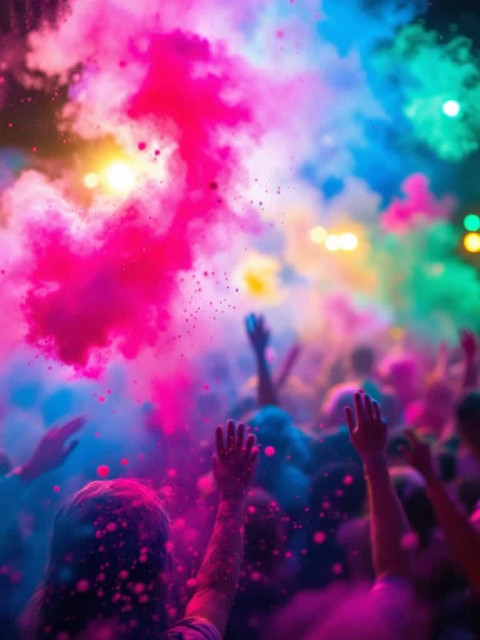
Holi: The Festival of Colors and Joy
Holi, also known as the “Festival of Colors” or the “Festival of Love”, is a Hindu spring festival celebrated every year on the full moon day in the Hindu month of Phalguna, which falls in February or March. Holi is a time of joy and celebration, where people come together to paint the town red (and every other color of the rainbow) with color powder, dance, sing, and feast with friends and family.
The Origin and Significance of Holi
Holi has a rich cultural and historical significance in Hindu mythology. According to Hindu legends, the festival commemorates the triumph of good over evil and the victory of Lord Vishnu over the demon king Hiranyakashipu. Another popular legend associated with Holi is the story of Radha and Lord Krishna, who are said to have played Holi together in the Vrindavan forests.
In addition to these religious and mythological references, Holi also marks the beginning of spring and symbolizes new beginnings, renewal, and the victory of life over death. It is a time to let go of grudges and negativity and to come together in unity and love, spreading joy and happiness.
Celebrating Holi
Holi is celebrated in different ways across India and the world, but some of the most common traditions include:
Throwing and smearing of color powders
One of the most iconic and fun parts of Holi is the throwing and smearing of color powders. People gather in public spaces and cover each other in a rainbow of hues, symbolizing the coming together of different communities and the celebration of diversity.
Holi songs and dances
Holi is also a time for music, dance, and celebration. People sing and dance to traditional Holi songs, accompanied by dhol (a large, barrel-shaped drum) and other musical instruments.
Holi feast
No celebration is complete without food, and Holi is no exception. People come together to enjoy a feast of delicious, traditional dishes such as gujiya (sweet dumplings), mathri (crunchy, savory crackers), and thandai (a sweet, spicy drink made with almonds, rose petals, and spices).
Holika Dahan
The night before Holi is known as Holika Dahan, and it is a time to perform a ritual bonfire to symbolize the burning of negativity and evil. People gather around the bonfire, perform prayers, and sing and dance to celebrate the occasion.
The Future of Holi
Holi is a festival that continues to evolve and adapt to changing times, but the core essence of the festival remains the same: spreading joy, unity, and love. With the advent of new technologies, Holi has also become a more global phenomenon, with people from all over the world celebrating the festival in their own unique way.
As Holi continues to grow and spread its message of love and positivity, it serves as a reminder of the power of coming together and celebrating our differences, and the importance of spreading joy, happiness, and peace in our communities.
So, this Holi, let's come together and spread the colors of love, unity, and joy. Happy Holi!